

Therapy Designed Around Your Story



Trauma, Anxiety & Depression
Identity, Self-Worth & Relationships
Stress, Perfectionism & People Pleasing


Trauma-Informed Therapy
Difficult experiences can continue to shape how you feel, relate to others, respond to stress, and move through the world long after the experience itself has passed. You may understand what happened intellectually while still noticing that certain patterns, emotions, or reactions are difficult to change.
Trauma-informed therapy creates space to understand these experiences without reducing you to what happened to you. Together, we can explore how your experiences have shaped your beliefs, relationships, coping patterns, and sense of self while building greater safety, awareness, and choice.
Our work is collaborative and paced with care. You will not be expected to share or process experiences before you feel ready.
Common areas we may explore:
Difficult or traumatic life experiences
Shame and self-worth
Relationship patterns and boundaries
Perfectionism and people pleasing
Identity and sense of self
Anxiety, overwhelm, and patterns of survival
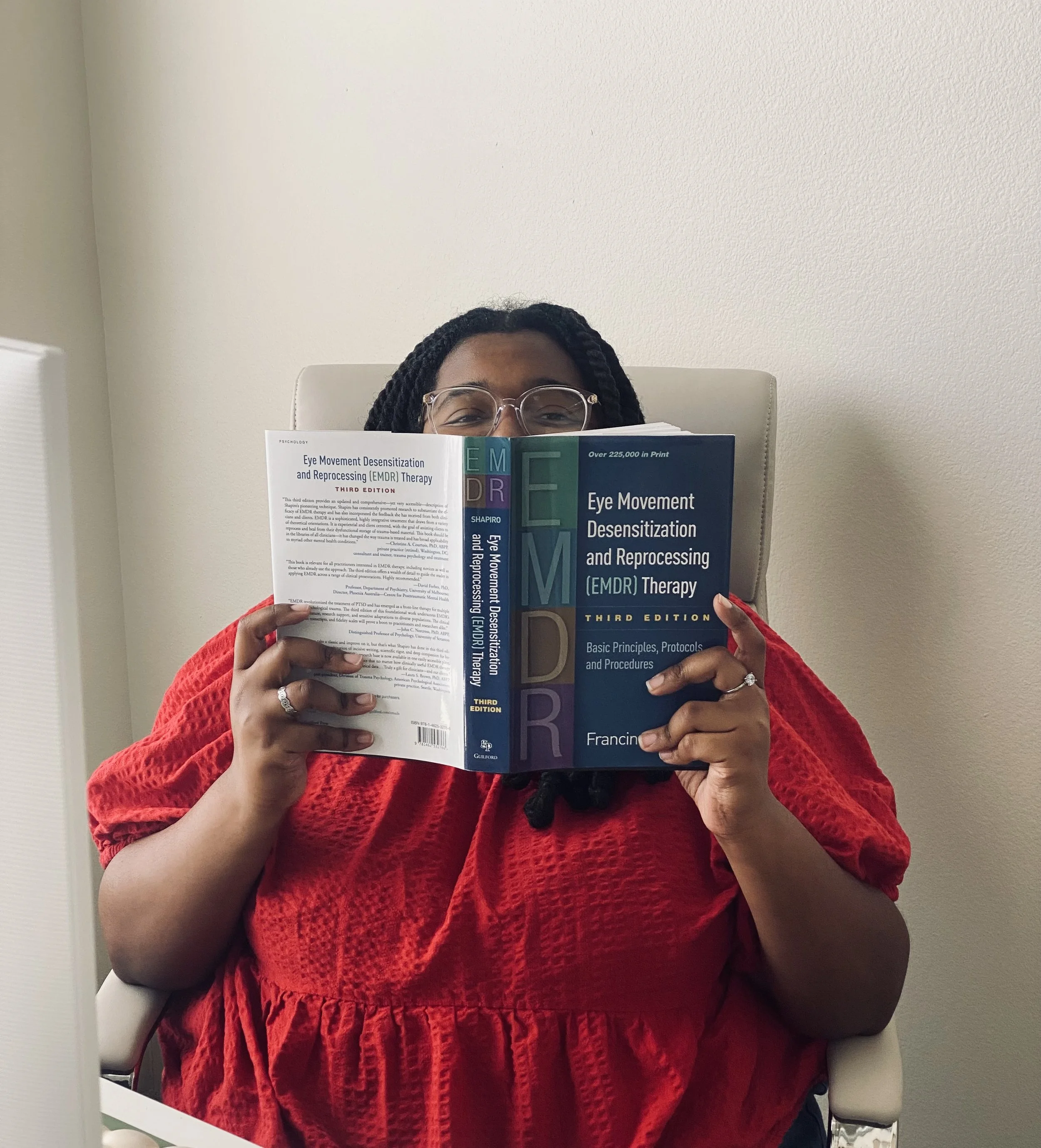

EMDR Therapy
Sometimes difficult experiences continue to affect you even when you know they are in the past. Certain memories, emotions, beliefs, or body responses may still feel activated, leaving you reacting to the present through experiences that have not fully resolved.
Eye Movement Desensitization and Reprocessing, or EMDR, is a structured therapy approach designed to help the brain process distressing experiences and memories. EMDR does not require you to describe every detail of an experience in order for meaningful processing to occur.
EMDR may be integrated into ongoing therapy when appropriate. For established clients who would benefit from additional processing time, I also offer extended 90 minute EMDR sessions.
EMDR may be helpful for experiences related to:
Trauma and distressing experiences
Difficult or painful memories
Anxiety and emotional triggers
Negative beliefs about yourself
Shame and self-worth
Patterns that feel difficult to change

Creative & Expressive Therapy
When Words Alone Are Not Enough
Sometimes an experience is difficult to put into words. You may know that something feels stuck, disconnected, or unresolved without knowing exactly how to explain it.
Creative and expressive therapy offers additional ways to explore emotions, experiences, identity, relationships, and the stories you carry. Depending on what feels meaningful to you, our work may incorporate elements of drama therapy, storytelling, imagery, metaphor, movement, writing, or other creative processes alongside traditional talk therapy.
You do not need to consider yourself creative, artistic, or comfortable performing. These approaches are always collaborative and optional, and we will use them only when they feel supportive and relevant to your therapy.
Creative approaches may support exploration of:
Identity and self-exploration
Shame and self-worth
Difficult emotions and experiences
Relationship patterns and boundaries
Grief and loss
Self-expression and personal meaning

How Therapy Works

Start with a Consultation
Schedule a complimentary 20-minute phone consultation to see if we may be a good fit.

Begin Therapy
We’ll start by exploring what brings you to therapy, what you hope to change, and what support may be most helpful.

Shape the Work Together
Therapy is collaborative and tailored to your needs, goals, and pace as our work evolves.

Therapy can make space for the many parts of your experience. Together, we’ll explore what’s bringing you here and shape our work around what matters most to you.

Trauma, Anxiety & Depression
Support for difficult experiences, low mood, worry, overwhelm, emotional triggers, and patterns that can make everyday life feel harder.

Identity, Self-Worth & Relationships
Explore identity, shame, self-esteem, boundaries, relationship patterns, and ways of relating to yourself and others.

Stress, Perfectionism & People Pleasing
Understand patterns of overfunctioning, burnout, self-pressure, people pleasing, and feeling responsible for everyone else.
Ready when you are
Have a question about Amplify Your Narrative, want to connect professionally, or need to reach out regarding a referral? You’re welcome to send a message here.
If you’re interested in starting therapy, the best place to begin is with a complimentary 20 minute consultation.

Frequently Asked Questions
Have questions about starting therapy, fees, or what to expect? Here are answers to some of the most common questions about working with Amplify Your Narrative.
-
Yes. I offer a complimentary 20-minute phone consultation so we can briefly discuss what brings you to therapy, what you’re looking for, and whether we may be a good fit. There is no obligation to begin therapy after the consultation.
-
Start by scheduling a complimentary 20-minute phone consultation. If we decide to work together, you’ll receive information to access the secure client portal, complete your intake paperwork, and schedule your initial therapy assessment.
-
That’s completely okay. You don’t need to know exactly what to say, where to begin, or what you want therapy to look like before getting started.
We’ll move at a pace that feels manageable and work together to understand what brings you to therapy, identify what you would like to change or better understand, and develop goals for our work together. You’re always welcome to ask questions about the therapy process along the way.
-
Amplify Your Narrative is a private-pay practice and does not bill insurance directly. If your plan includes out-of-network mental health benefits, you may be eligible for reimbursement for a portion of your therapy costs.
I can provide superbills for eligible services, and clients may also choose to use Mentaya for additional support with out-of-network benefits and claim submission. Reimbursement is determined by your insurance plan and is not guaranteed.
Visit the Fees & Payment page for more information about rates, superbills, Mentaya, and out-of-network benefits.
-
All therapy sessions are provided virtually through secure telehealth. This allows you to attend sessions from a private, comfortable location without the need to travel to an office.
At the time of each therapy session, you must be physically located in a state where I am legally authorized to provide psychotherapy services.All therapy sessions are currently provided virtually through secure telehealth. You must be physically located in a state where I am authorized to practice at the time of your session.
-
Thank you for considering Amplify Your Narrative as a referral resource. If you are a therapist, healthcare provider, or other professional interested in referring a client, please complete the contact form on this page and select Professional Referral from the dropdown menu.
Please do not include confidential clinical information or protected health information in the contact form. I will follow up with you directly to discuss next steps and determine the most appropriate way to coordinate the referral.